The first decision in Kichijoji is which way to leave the station. Walk north and you can follow a covered shopping street past pharmacies, clothes and places to eat. Go south and, within a few minutes, you can be beside a pond under trees. You do not have to choose one version of the neighborhood: the two fit comfortably into a half day.
I lived in Kichijoji when I was single. The route below is a suggestion for seeing the area today, not a reconstruction of a particular afternoon I spent there. My suggestion is to treat the station as a hinge: look around the shopping street while you have energy, then give yourself permission to slow down by the water. If your group needs quiet first, reverse the order.
The combination is appealing precisely because neither stop has to carry the whole outing. Sun Road is good for browsing without a shopping list; Inokashira Park gives you somewhere to pause without ordering anything. There are trade-offs, though. A roof does not guarantee an uncrowded arcade, and a park beside a busy station is not necessarily silent. The details below should help you decide how much time to give each.
The route at a glance
- Kichijoji Station · north exit
- Sun Road shopping street
- Return past the station to its south side
- Inokashira Park · pond walk
Start: Kichijoji Station, north exit.
First: Browse Sun Road and return toward the station.
Next: Cross to the station’s south side and walk to Inokashira Park.
Finish: Return to Kichijoji Station, or use Inokashira-koen Station on the Keio Inokashira Line.
Allow about three to four hours including a meal or break. A shorter visit can work too: try 30 minutes under the arcade roof, a simple meal and 45 minutes by the pond. These are planning suggestions, not measured walking times. The park is free; food, shopping and some park facilities cost extra.
Kichijoji is on the JR Chuo and Sobu lines and the Keio Inokashira Line. The shopping street association estimates about 20 minutes from Shinjuku on the JR Chuo Rapid and about 20 minutes from Shibuya on the Keio Inokashira Line; services and travel times vary, so check your train. Once at Kichijoji, start at the north exit for Sun Road. Later, come back to the station and follow the signs to the south exit for the park.
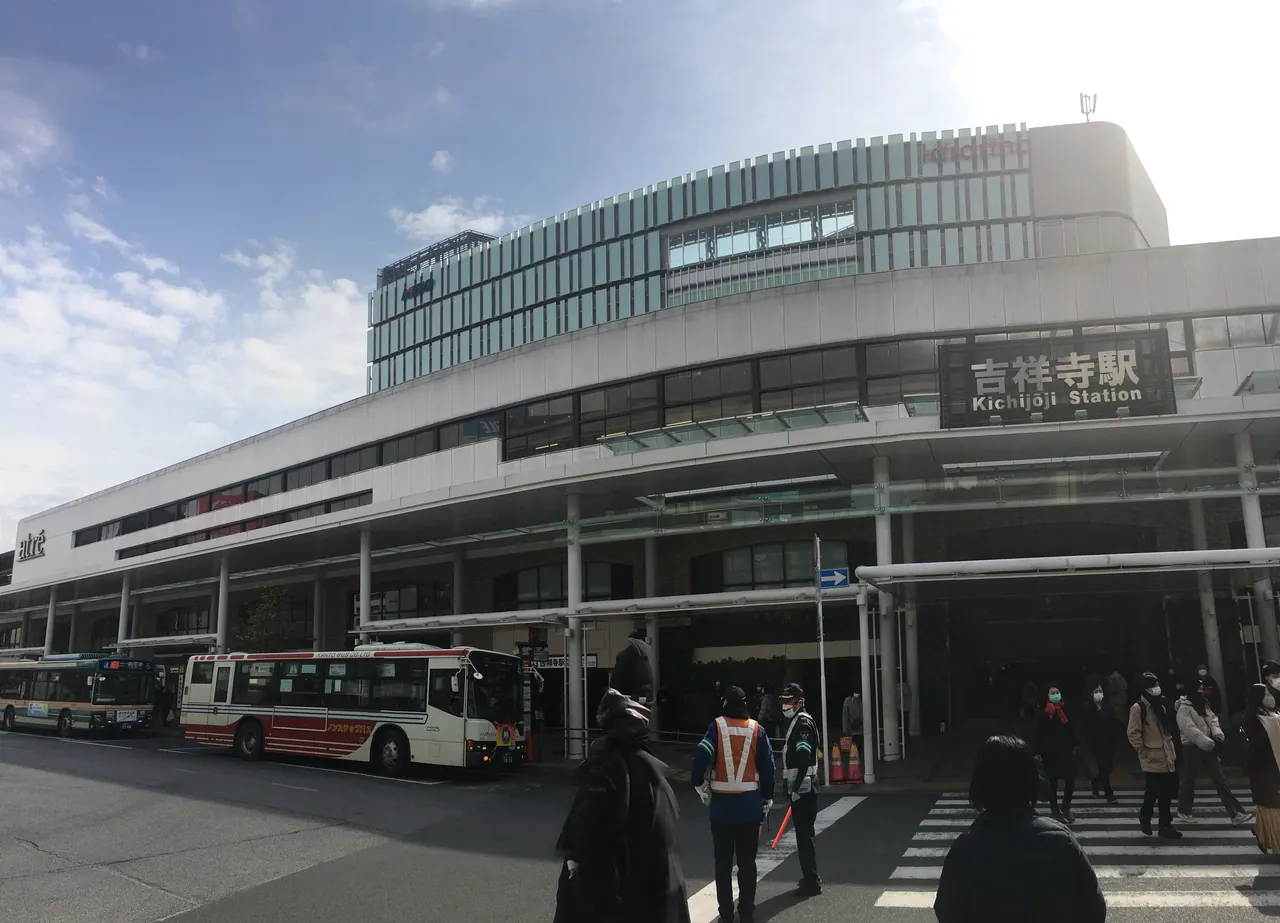
To picture the day, imagine arriving around 10:00 a.m. and giving Sun Road 45 minutes. Take up to an hour for a meal or a pause, then leave roughly 60–90 minutes for the park before heading back. That produces a leisurely outing of roughly three to four hours once you allow for the journeys between stops. It is a way to divide the time, not a timetable tested on foot; restaurants and shops set their own hours. If the first part runs long, shorten the park visit rather than trying to make up time by rushing.
When you switch sides of the station, look for signs to the south exit and check your own route around the station. The north-to-south change is a useful landmark, but we have not verified a single step-free path between the arcade and the pond. If stairs, elevators or an uninterrupted step-free route are important to you, allow time to check the park’s official access information and the station information for your train line.
Sun Road: a useful shopping street, not a curated souvenir set
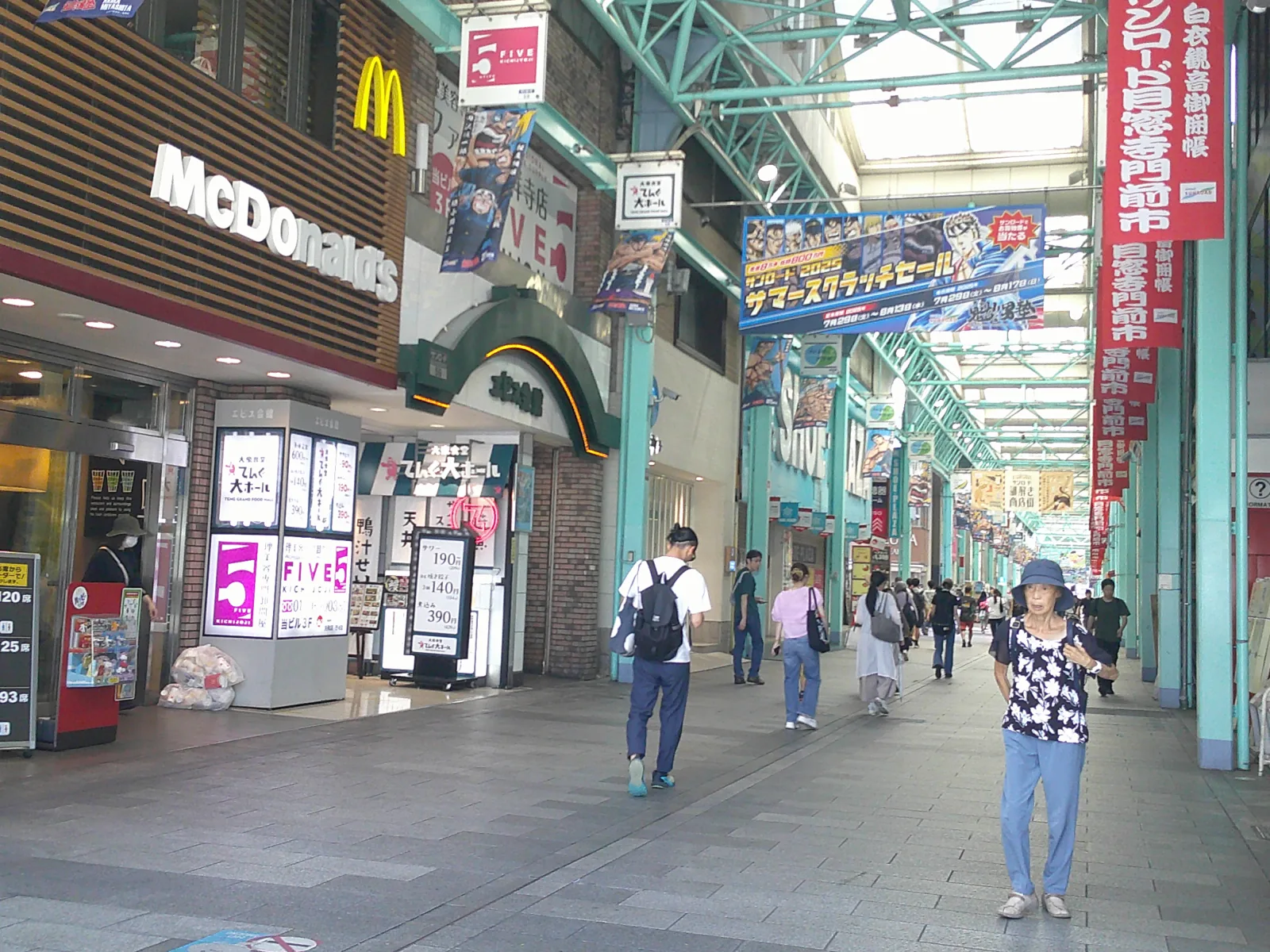
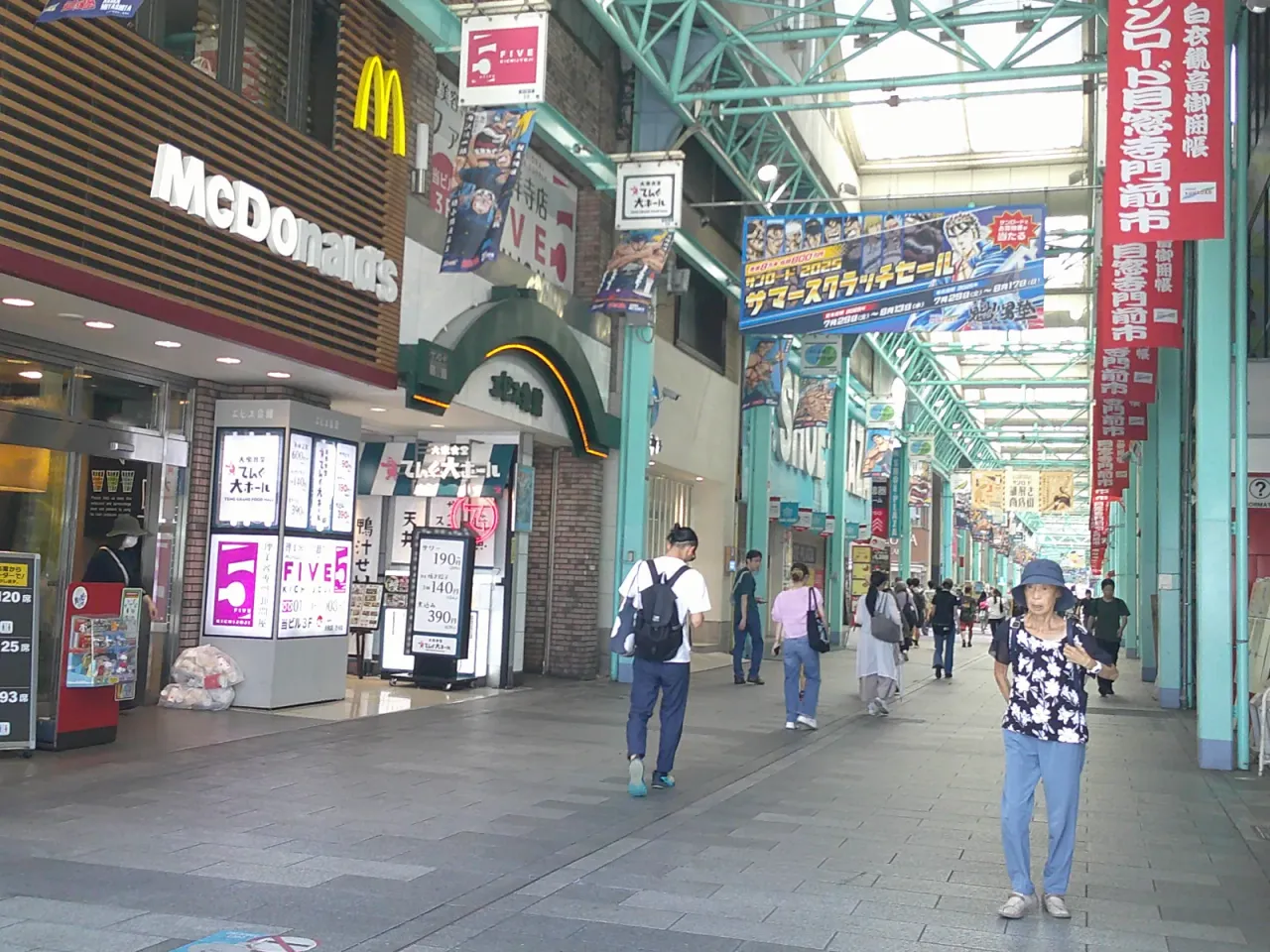
A shotengai is a shopping street, often run through an association of its businesses. Sun Road’s association describes its arcade as roughly 300 meters long, with about 160 businesses, extending from Kichijoji Station’s north side toward Itsukaichi-dori. Think of those figures as the association’s description, not a guarantee that every storefront will be open when you arrive.
Start near the station and walk under the roof, looking at what interests you. You will see practical shops alongside places to eat and browse. Look up as well as along the ground floor: the association’s digital directory lists businesses on upper and basement floors, so a restaurant you cannot see from the pavement may still be nearby. The directory is in Japanese and opening hours belong to each business; check a particular place before making it the anchor of your day.
There is a useful reason to look at the roof as well. The association calls it a retractable arcade and says the fabric softens daylight. It connects a street that has changed over decades: the association traces its organization to 1958 and the completion of an arcade named Sun Road to 1971. In 2026, it says the entrance signs and large maps were redesigned with retro-style illustrations based on shop managers, alongside augmented-reality features. The association is describing its own project; availability and the appearance of individual businesses can change. Its history and description of the arcade are useful starting points if those layers catch your attention.
Try browsing in two passes if you have time: walk one direction without feeling you must buy anything, note a few places you would like to compare, then decide on the way back. Looking up at signs can reveal upstairs restaurants, but the entrance, menu and seating may require extra checking. If you need to sit or have a food allergy, check that a particular business can accommodate you before committing to it; the directory alone cannot answer either question.
The covered street is especially useful on a rainy day, but I would not assume the entire route is sheltered. The journey between the arcade and park is outdoors, and a side street that catches your eye may not have the same cover. Bring an umbrella even if the first part of your plan is indoors.
The Google Maps reviews we read help explain why the street can produce different reactions. Several people appreciated being able to shop under a roof. One described enjoying the mix of older shops and chains; another, writing years earlier, felt that the older shops were disappearing and that too many drugstores looked alike. Others enjoyed the liveliness but found it hard to walk in the crowd.
Those are individual impressions, not an inventory of today’s shops or a vote on whether the street has improved. For a visitor, the distinction is useful: come for a working shopping street with variety, not a promise that every business will be a tiny independent store. If you dislike crowded browsing, turn back after a short stretch and save your time for the park. If you enjoy looking at everyday things, allow 45–75 minutes, plus time for a meal.
The difference also affects a simple lunch decision. One reviewer mentioned buying lunch before eating beside the pond; others talked about eating in the wider area. A takeaway meal can keep the park part of the day flexible, while eating inside gives you a seat and shelter before the outdoor walk. Neither is a promise that a table or bench will be available. Ask about ingredients when that matters, and bring a bag for wrappers: the park asks visitors to take home the rubbish they bring in. Its visitor rules also ask people not to feed animals.
There is another small distinction in the reviews: a visitor writing seven years before our check felt there were no resting benches on the shopping street, while a park reviewer remembered few empty benches in early spring. Those accounts do not establish what is available now. They are a reason to decide whether you need a seat, shelter, or just a pause before leaving the station area; the right break will look different for someone carrying a child or recovering from a long train journey.
Cross the station, then let the pond set the pace
Return toward Kichijoji Station, cross to its south side and follow the signs for Inokashira Park. The park association gives a five-minute walk from JR Kichijoji Station; that estimate is from the station, not from the far end of Sun Road, and does not include stops. Inokashira-koen Station is listed as a one-minute walk from the park and is a useful alternative for the way home.
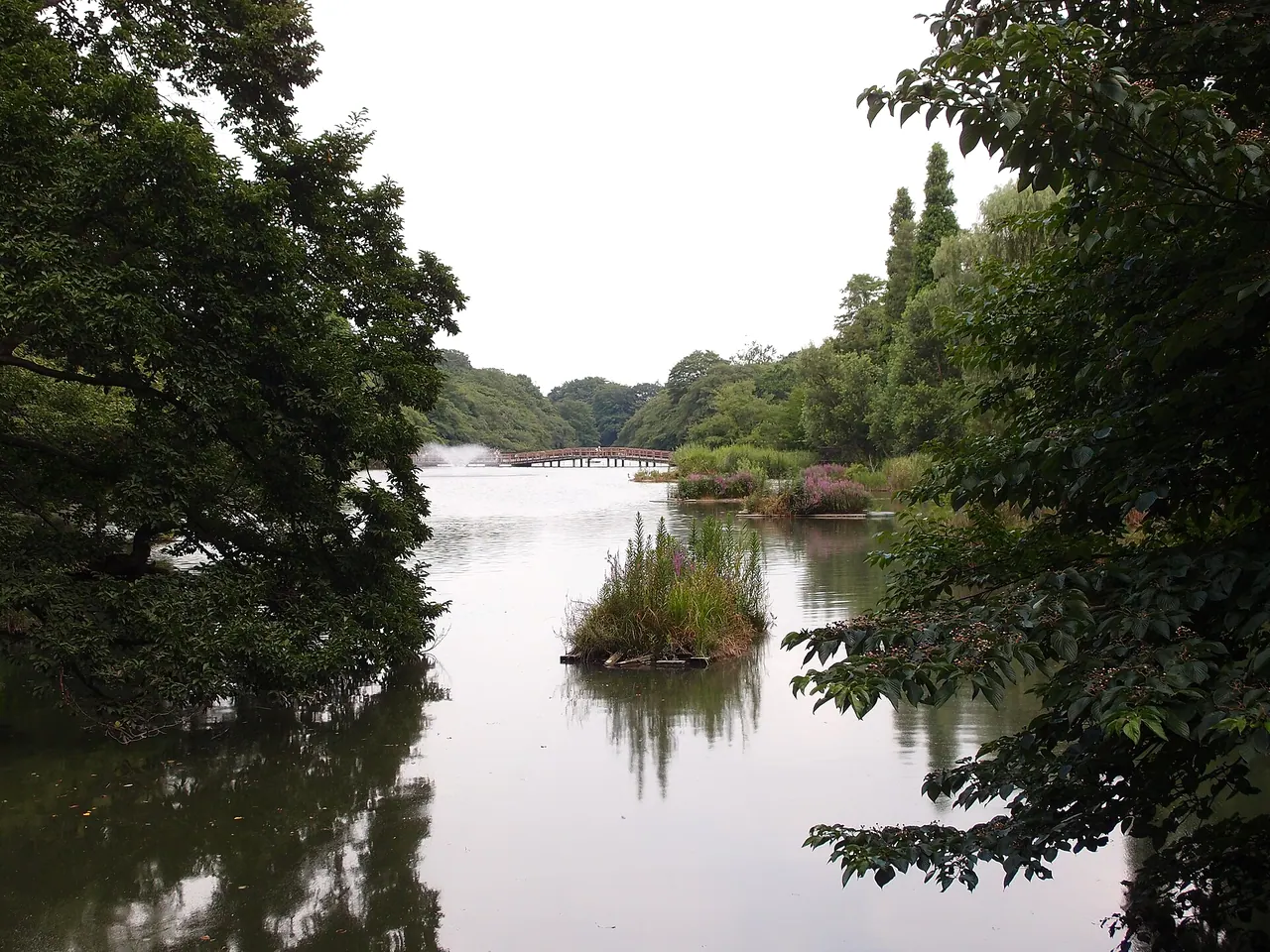
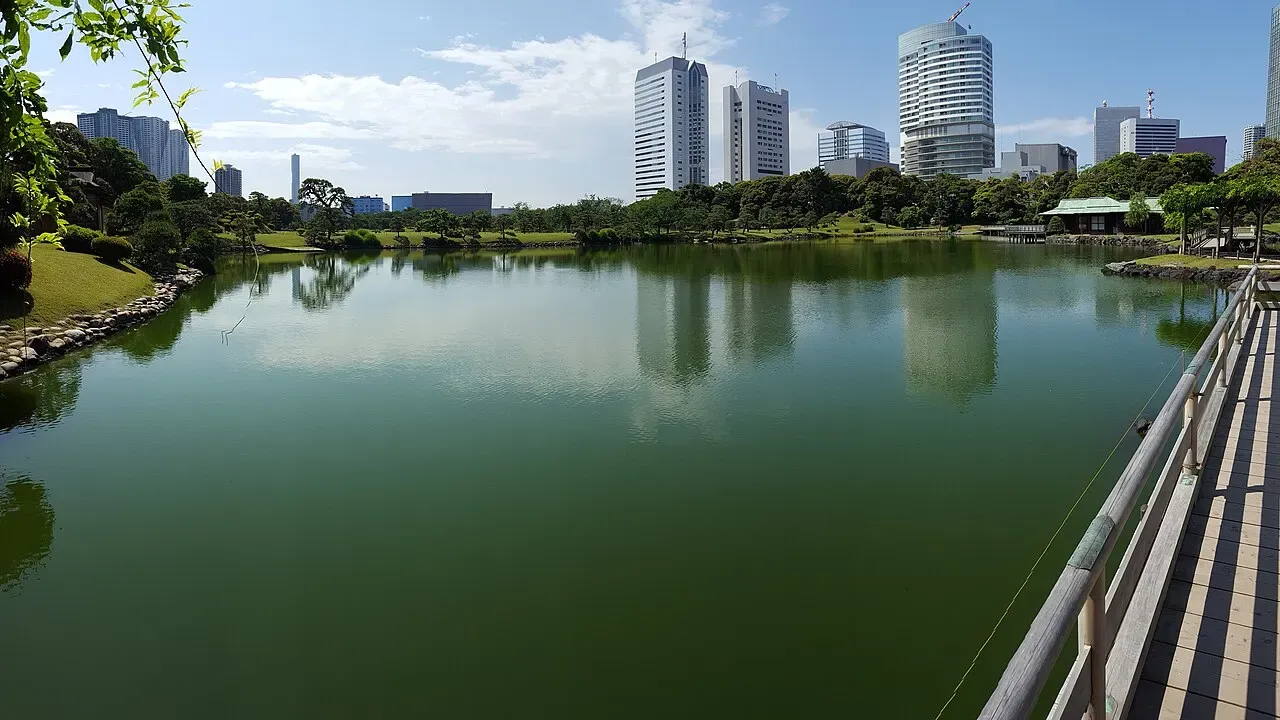
At the pond, there is no need to turn a rest into another task. Choose a stretch of water, walk as far as feels comfortable and turn around. You can spend ten minutes looking across the pond or make room for 60–90 minutes of walking and sitting. A full circuit is optional, not a condition for having seen the park.
How much walking is a full circuit? The Tokyo Metropolitan Government gives the pond’s perimeter as approximately 1.5 kilometres in its park overview. That is a measurement of the water’s perimeter, not a measured step-free loop or a promise that your particular route will be exactly that distance. A bridge crossing, detour or return to a different station changes the walk. Look at the official map before deciding whether a full circuit fits your group; if it does not, the same waterside view can be enjoyed on a shorter out-and-back.
The pond is only one part of a larger park. The metropolitan government describes four areas: the pond, the wooded Gotenyama area, the sports-oriented West Garden and the Second Park. Its park map is useful if a sign or a map app refers to an area you had not planned to visit. For this half day, staying near the pond is a deliberate choice: it leaves time to look around without assuming that every part of the park belongs in the same afternoon.
The park is open at all times and admission is free, though individual facilities may charge separately and close over the New Year period. That matters if you are watching your budget: the main waterside walk does not depend on renting a boat or buying a drink. If you do want to use a paid facility, consult the park’s current facility information rather than assuming that its hours match the park’s.
If you would like to go out on the pond, the park association lists rowboats at ¥800 per 30 minutes and cycle or swan boats at ¥1,000 per 30 minutes. From November through February, its published boat-house hours are 9:30 a.m.–4:50 p.m., with last reception at 3:50 p.m.; it lists Wednesdays as closed from December through February. These details were checked on November 6, 2026, and can change with the season or conditions. Check the official boat information before making it the fixed point of your afternoon.
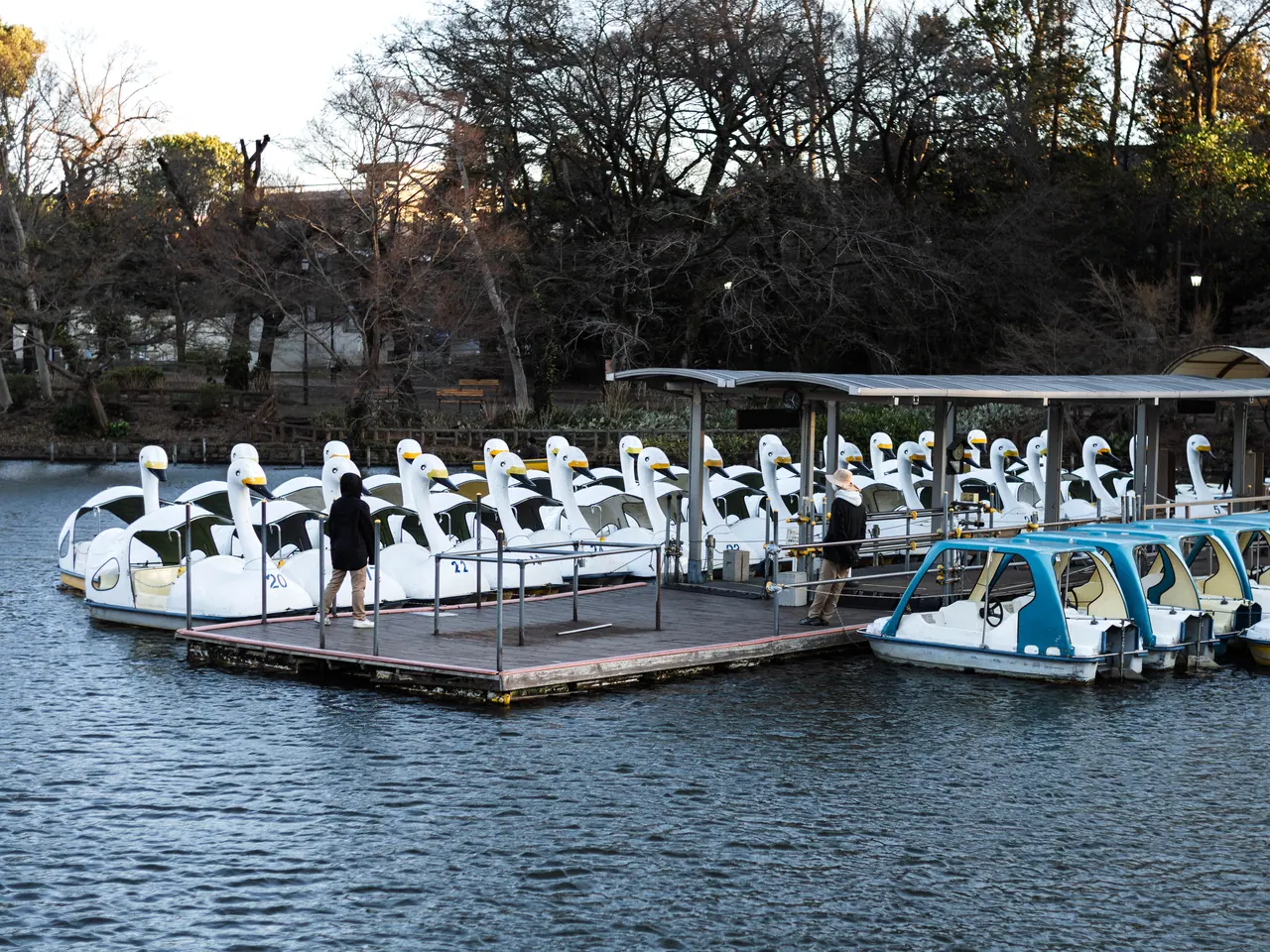
The park itself opened in 1917, when this was considered a suburban park; today the metropolitan government describes it as green space adjoining residential areas. The contrast is worth noticing when you come from the station: a short walk connects a busy commercial street to a much older public landscape. The park’s official introduction describes the pond area as low ground and Gotenyama as higher ground, another reason not to assume every route has the same gradients.
One detail changes the way I would look at this pond: it was part of an early water system serving Edo, the city that became Tokyo. The Tokyo Metropolitan Government identifies the pond as the source of the Kanda River and describes its role in the Kanda water supply. The waterworks bureau says that system also drew on other ponds and continued until modern waterworks replaced it. It is a place to rest, but also a reminder that the water connecting different parts of the city has a history longer than the neighborhood’s cafés and shops.
What the reviews suggest about crowds and the water
We read 100 written Google Maps reviews of Sun Road and 165 of Inokashira Park, in samples collected on November 5–6, 2026. We included reviews in different orders; some were displayed through Google translation, and some low-rated park reviews concerned the zoo or events years ago rather than a walk around the pond. The selection is not representative of everyone who visits, and star ratings alone do not tell you what a place will be like today.
Among the park reviews, one visitor enjoyed coffee on a bench on a weekday; another felt that even a morning walk around the pond was busy with runners and people walking dogs. A spring visitor described a queue from the station toward the park, while others enjoyed the cherry blossoms despite the people. These accounts do not establish the best day or guarantee a seat. They do suggest a sensible adjustment: if space to move matters more than the peak blossoms, keep your plan flexible and do not rely on a particular bench being free.
The spring pictures deserve a little context too. The park’s official highlights describe about 200 cherry trees around the pond, with branches reaching over the water. The sight can be beautiful, but it also concentrates visitors along the same edge. A reviewer in our sample saw a line from the station on March 29, 2026; another enjoyed walking around the pond in rain on March 26. Those dates belong to their particular visits: they cannot predict the flowering or crowds of another year. If seeing blossoms matters most, leave time to move on if the first stretch is too crowded; if having room to walk matters most, let the flowers be a bonus.
The pond itself also divides opinion. Some reviewers loved the water, trees and birds; others noticed its color or worried about its condition. The city and volunteers have carried out kaibori: draining and drying the pond bed as part of efforts to improve the ecosystem and water quality. The park association describes work in 2014 and 2016. That history does not establish today’s water quality, and a visitor’s description does not measure it. It does make the pond more interesting than a picture-perfect backdrop: this is an urban body of water people have had to look after.
Choose the version of the day that suits you
- For a relaxed first visit: Browse a portion of Sun Road, eat when you find a place that suits you, and leave the longest uncommitted stretch for the pond. You can return to Kichijoji Station without finishing the whole park.
- With a young child: Start with the park if a child needs to move before browsing; shorten the arcade if the crowd becomes tiring. Benches and toilets are useful to plan around, but availability and accessibility on a particular route are not guaranteed. The official park information links to a barrier-free route map; verify your specific needs before going.
- In rain: Give more time to the covered arcade and keep the park portion brief. You will still need rain protection between the two; wet paving and steps may affect your chosen route.
- If you are short on time or avoiding crowds: Skip the far end of Sun Road or turn back early at the pond. Kichijoji Station connects both halves, so you do not need to complete either one to have a worthwhile visit.
For another way home, Inokashira-koen Station is near the park.
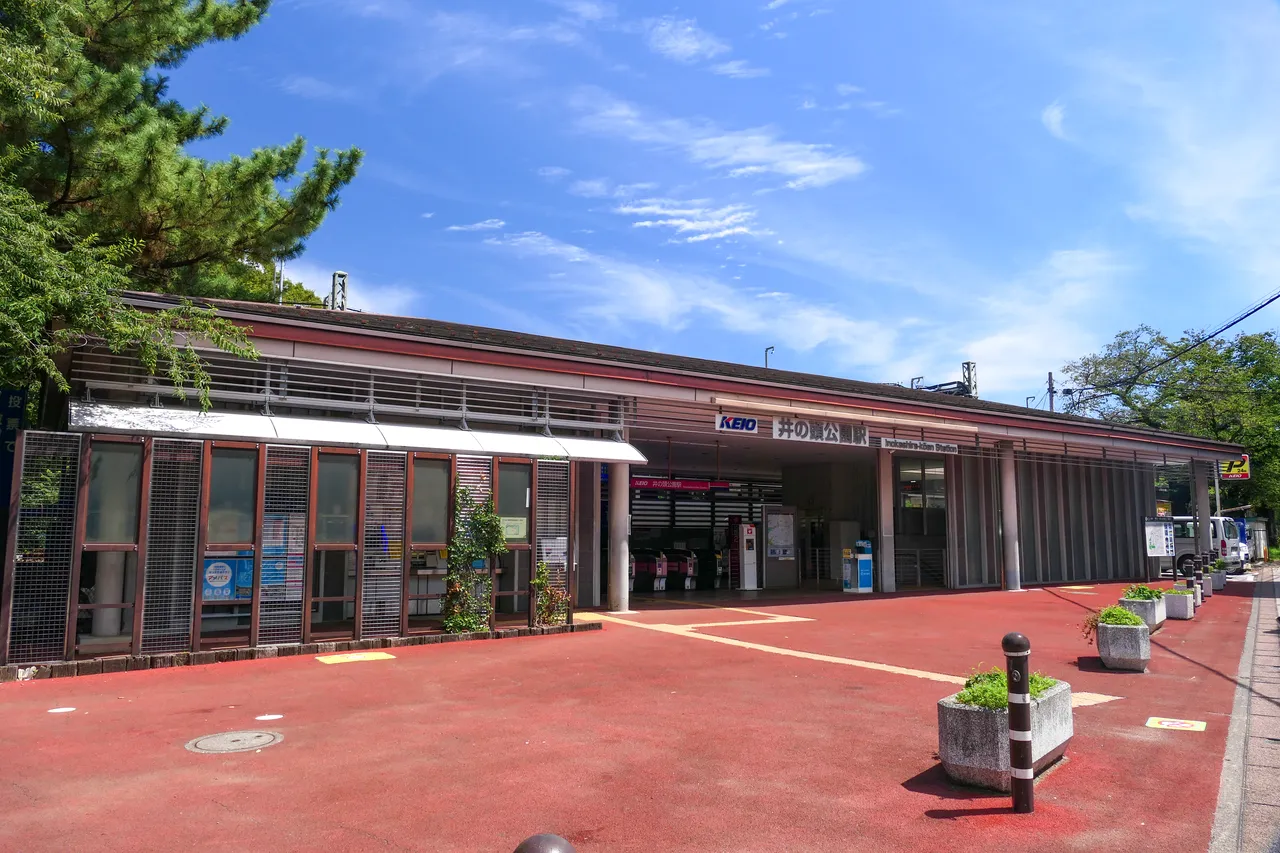
The attraction of this particular half day is its flexibility. You can see a busy shopping street and a much greener part of Tokyo close together, without filling the afternoon with admissions or racing to a fixed booking. Whether it feels calm will depend on the day; the option to change direction is what makes the plan useful.